

BIND AT
THE SOURCE.
Associate data with verifiable cryptographic evidence from the originating identity.
E5 TRUST INFRASTRUCTURE FOR CONTESTED SYSTEMS
A secure connection does not prove the source. 4MIK binds verifiable evidence to data where it begins, so receiving systems can check what they are trusting before they act.
THE PROBLEM
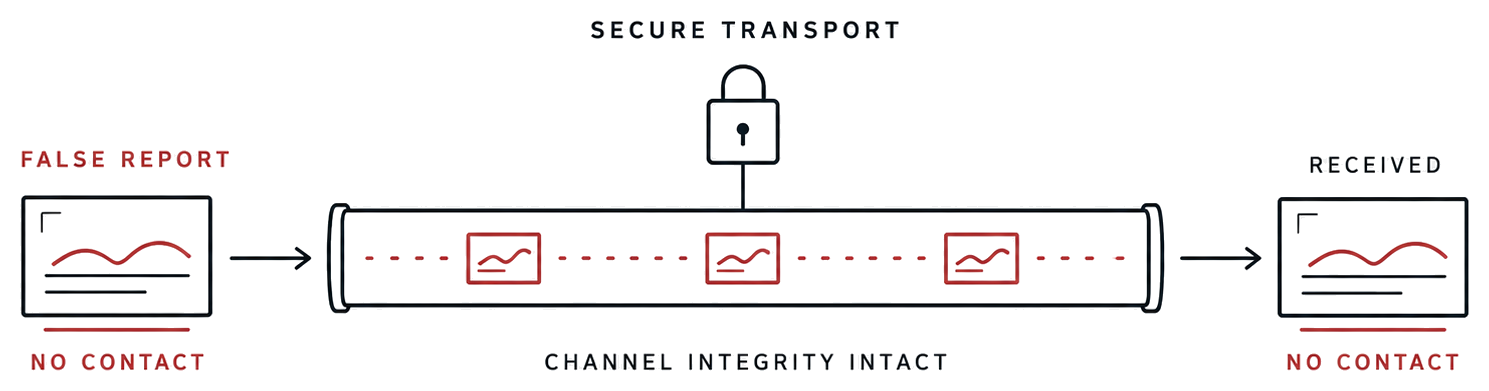
The next attack does not have to break encryption. It can target the information your systems trust before that information ever reaches the encrypted link.
Replayed video. Fabricated telemetry. Impersonated sources. Machine actions executed outside their authority. As decision cycles accelerate, verification has to move closer to the source and into the decision path.
SEE WHAT CHANGES WITH 4MIK ↗Illustration of a general threat model, not a claim that every system behaves this way.
SEE THE DIFFERENCE
The map can look convincing even when its tracks are unverified. Switch on 4MIK to see how source-bound evidence changes the operational picture.
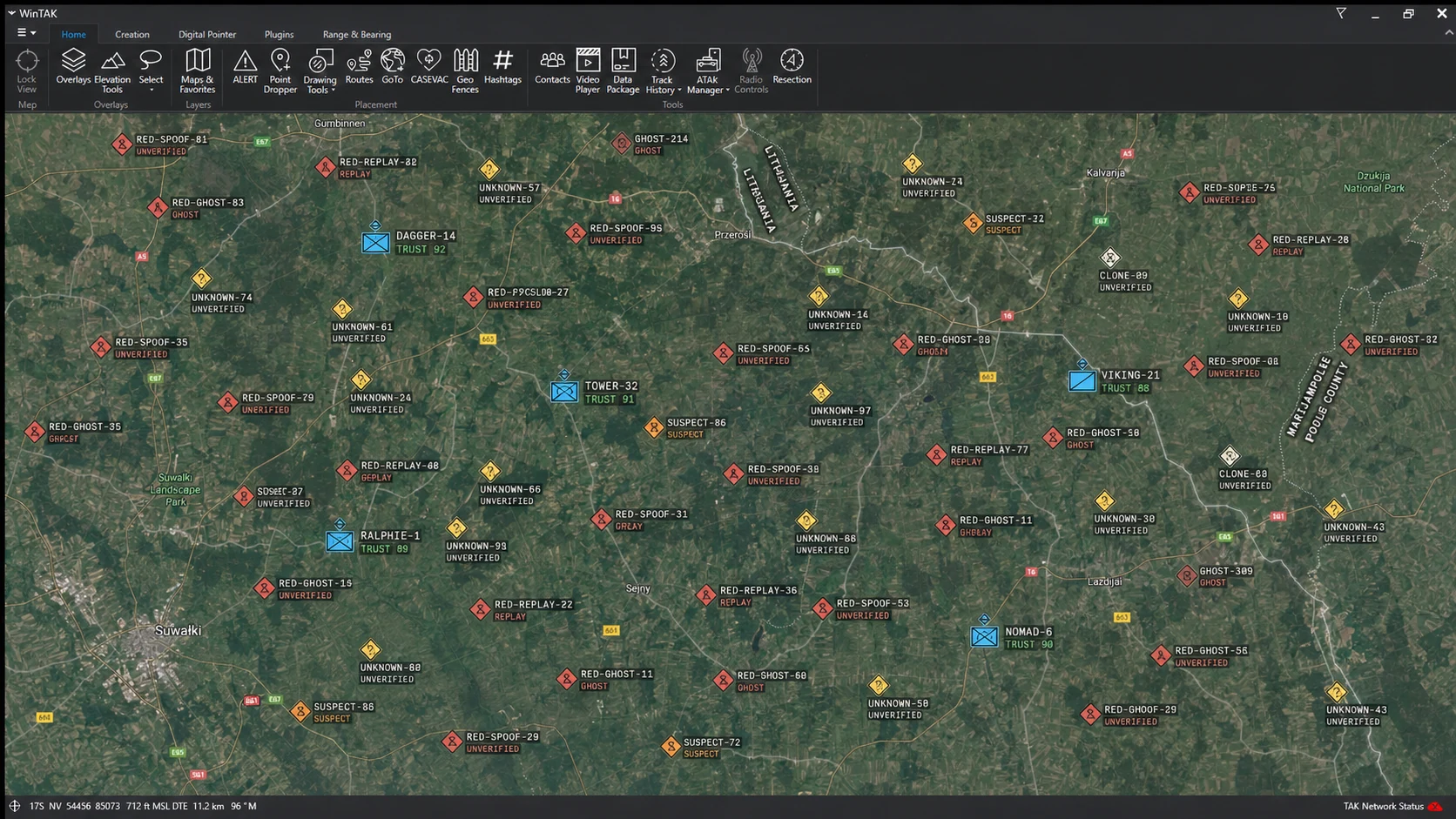
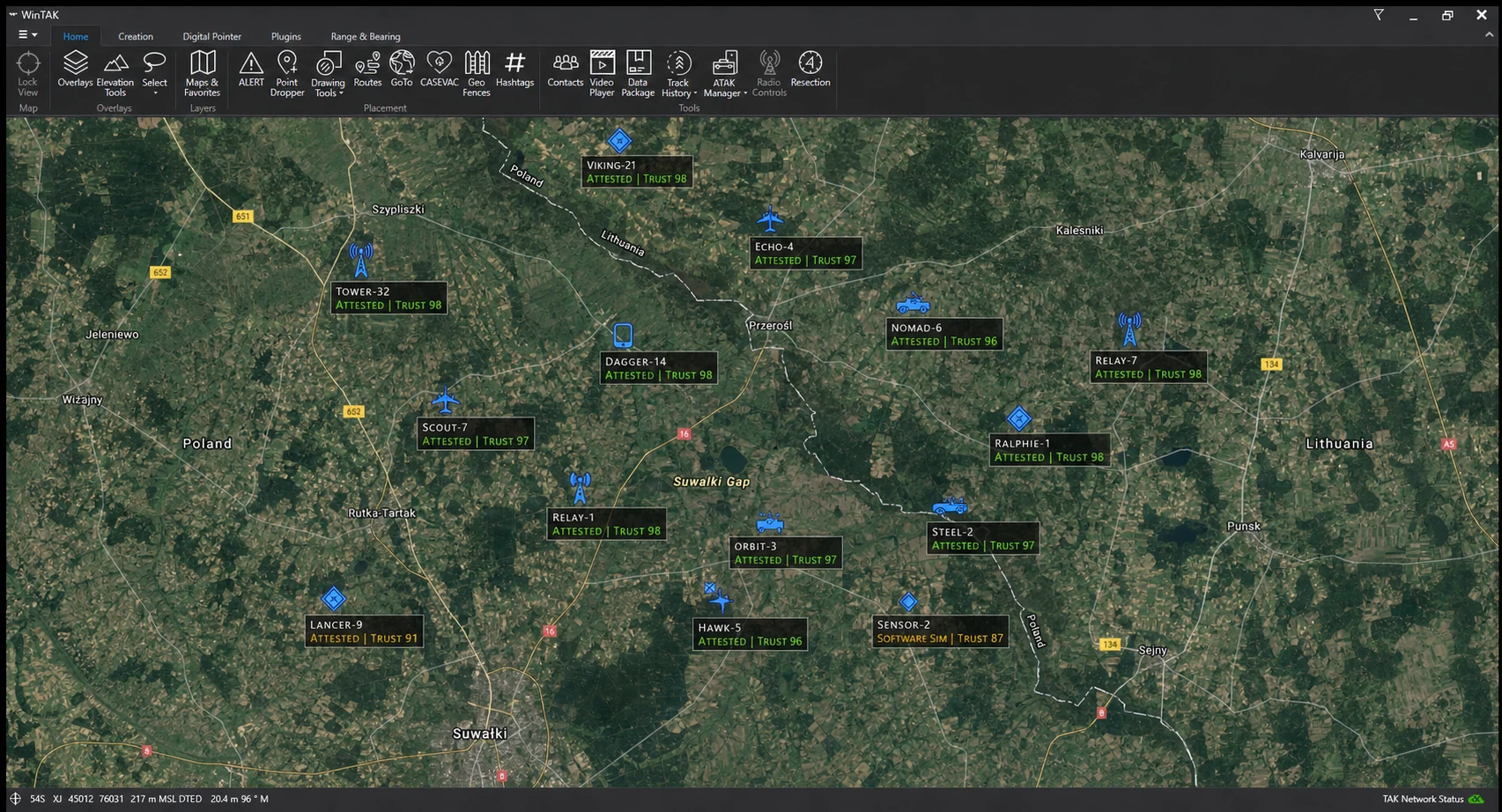
Unverified, replayed, or spoofed tracks can crowd the map. A symbol on screen is not evidence that its source can be trusted.
ILLUSTRATIVE TAK SCENARIO. Supplied screenshots show contrasting trust states; they are not a claim that every displayed track or sensor observation is independently validated. Verification depends on the configured evidence and policy.
THE APPROACH
4MIK adds an evidence and verification layer to the systems that generate, transmit, consume, and act on machine data. One coherent story: identity at origin, evidence with the data, verification at the decision point.
Associate data with verifiable cryptographic evidence from the originating identity.
Check provenance, integrity, freshness, and continuity at the receiving boundary.
Give the consuming application a meaningful verification result before consequential action.
INTERACTIVE PATH
Every stage is unprotected except the link, and the link is only protected in transit. A compromised sensor, a spoofed track, or a replayed feed gets in before the radio ever sees it, and the radio carries it securely like any other message.
THE 4MIK CONTROL ARCHITECTURE
E5 is the governing control architecture across the 4MIK stack. It defines the sequence by which identity is established, evidence is attached, policy is enforced, invalid inputs are rejected, and machine action is allowed only when trust conditions are satisfied.
CONTROL SEQUENCE
Rather than assuming a source should be trusted, E5 creates a repeatable decision sequence: establish identity, protect and bind integrity, apply policy, reject what fails, and execute only when the evidence supports action.
Establish verifiable identity for authorized participants and sources.
Protect data and bind integrity to source.
Apply authority and policy before action.
Reject unauthorized sources, altered data, stale state, replay, and invalid requests.
Allow action only when identity, integrity, freshness, continuity, and authority are verified.
WHERE IT MATTERS
Defense is the starting point. The underlying trust problem follows data into every system where machines are expected to decide and act.
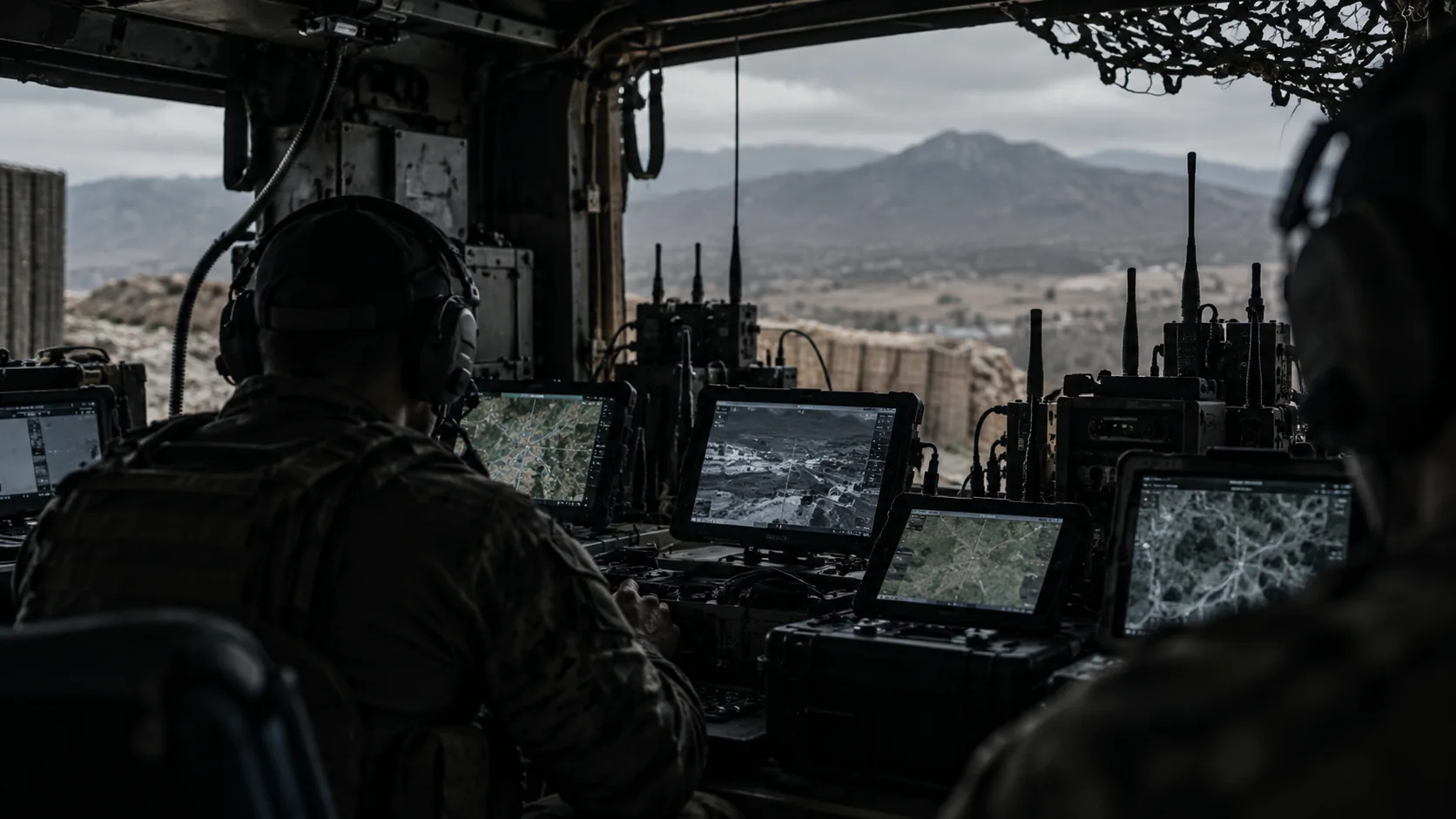
ISR, maritime, TAK/C2, distributed sensors

Factories, infrastructure, sensor networks

Ports, movement, operational telemetry
4MIK / THE NEXT TRUST STANDARD
See how verifiable source identity and evidence can change decisions inside your system.
START A TECHNICAL CONVERSATION ↗